ServicesKids' Dentistry
Kids' Dentistry in Oxford, MA
Checkups, cleanings, sealants and small fillings for children, from the first tooth through the teen years. We explain what we see in words your child understands, tell you what it means, and agree on next steps with you before any treatment begins.
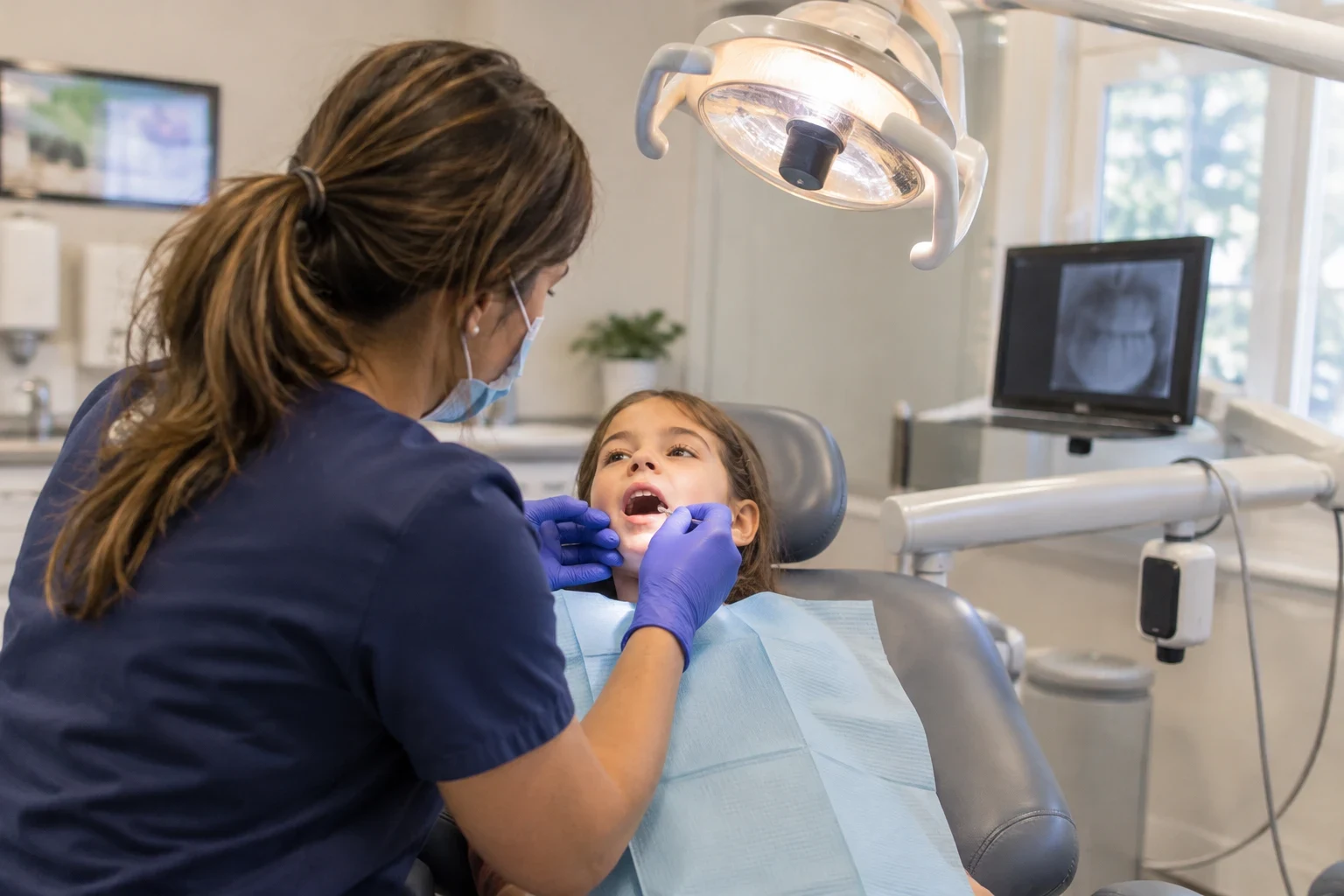
Dental care sized for growing mouths
Baby teeth have thinner enamel than adult teeth, so a small spot of decay can reach the nerve faster than many parents expect. They also hold space for the permanent teeth forming underneath. Looking after them well is less about perfect brushing and more about catching small changes early.
Our visits for children are short, calm and paced to the child. We show the tools first, count teeth out loud and pause for a break whenever one is needed. You leave knowing what we found and what, if anything, comes next.
Families come to us from Oxford and nearby towns such as Webster, Auburn and Charlton. Most visits are simple checkups. When something does need attention, we lay out the options in plain English, including the times when watching a spot and checking it again is a sensible choice.
What a children's visit can include
First visit and exam
A first visit around the first birthday, or when the first tooth appears, is a good starting point. For toddlers it is often a quick exam with the child sitting on a parent's lap. We check how teeth are coming in, look at the gums and bite, and talk through bottles, sippy cups and thumb habits.
Gentle cleaning
We clear plaque and tartar with small instruments and a soft polishing cup. Each step is explained to your child before we start it.
Fluoride varnish
A thin coating brushed onto the teeth in under a minute. It helps strengthen enamel against early decay, and we give you simple instructions for eating and brushing afterward.
Sealants for back teeth
A thin, tooth-colored coating flowed into the deep grooves of the molars, where toothbrush bristles struggle to reach. No drilling or numbing is needed. They are usually placed as the permanent molars arrive, often around age six and again near twelve.
X-rays only when useful
We take X-rays when they answer a real question, such as decay hiding between teeth or how adult teeth are developing. We tell you why before we take any.
Fillings for small cavities
When a cavity needs treatment, we numb the area gently and use tooth-colored material. Our Fillings page explains the materials in more detail.
When a child's teeth need a closer look
Dull white lines near the gums
Matte, chalky marks along the gumline, or patches turning brown, are usually where decay begins. Found at this stage, they can sometimes be hardened again with fluoride rather than filled.
Flinching at cold or sugary treats
If your child pulls back from ice cream or quietly shifts chewing to one side, a cavity or a small crack may be the reason.
Pink on the toothbrush
Gums that bleed or look swollen when brushing usually mean plaque is collecting where tooth meets gum. A cleaning and a few simple brushing tips tend to calm it down.
A knock or a chip from a fall
A tooth can look perfectly normal after a tumble and then turn gray weeks later. Give us a call to set up a visit so we can check the root and nerve.
A second row of teeth coming in
Now and then an adult tooth pushes through before the baby tooth has loosened, so two sit one behind the other. We look at whether the baby tooth will fall out by itself or needs a little help.
How a visit goes
- 1
The phone call
We ask your child's age, any worries you have and your insurance details, then find an appointment time. Many parents find mornings easier for younger children.
- 2
Settling in
Your child can sit in the chair, try the light and meet the mirror before any work begins. You are welcome to stay close by.
- 3
Exam and cleaning
We count and check each tooth, clean and polish, and add fluoride or sealants if they were agreed with you.
- 4
Talking it through
We show you what we saw, often on a photo or an X-ray, and explain it plainly. If treatment is needed, you get a written treatment plan with the options and costs before you decide anything.
What affects the cost of a child's visit
Most children's visits are checkups and cleanings, which dental plans generally treat as preventive care. The cost changes when a visit adds X-rays, sealants or treatment. We accept most dental insurance plans and go over your expected share before any work begins.
- Your plan's rules
- Plans differ on how often they cover cleanings and fluoride, and some limit sealants to certain ages or teeth. We check your benefits and tell you what to expect.
- No dental insurance
- Our Office Dental Plan is available for patients without insurance. We can explain how it works when you call.
- Treatment beyond a cleaning
- Sealants are priced per tooth, and fillings depend on how many teeth and surfaces are involved. Catching decay small keeps both the visit and the cost smaller.
- Spreading payments out
- For larger treatment plans, the CareCredit Patient Payment Plan lets you pay over time, subject to its approval.
Questions parents ask
Something not covered here? (508) 893-4948
When should my child first see a dentist?
Around the first birthday, or within six months of the first tooth. That first visit is short and mostly about checking development and answering your questions. Regular checkups usually follow every six months.
Can I stay with my child during the visit?
Yes. Many younger children are more relaxed with a parent nearby. Some older children prefer a little independence, and we follow their lead.
Do baby teeth really need fillings if they will fall out?
Often they do. Some back baby teeth stay until age ten to twelve, and an untreated cavity can become painful or infected. Losing one early can also let neighboring teeth drift into the space meant for the adult tooth.
My child is nervous. How do you handle that?
We go slowly, explain each step before doing it and agree on a signal for a break. If a child is not ready on the day, we can split the visit into shorter appointments rather than push.
Can the rest of the family be seen at the same office?
Yes. We also provide exams and cleanings, fillings, crowns and bridges, and clear aligners for teens and adults. Booking family visits back to back can save you a trip.
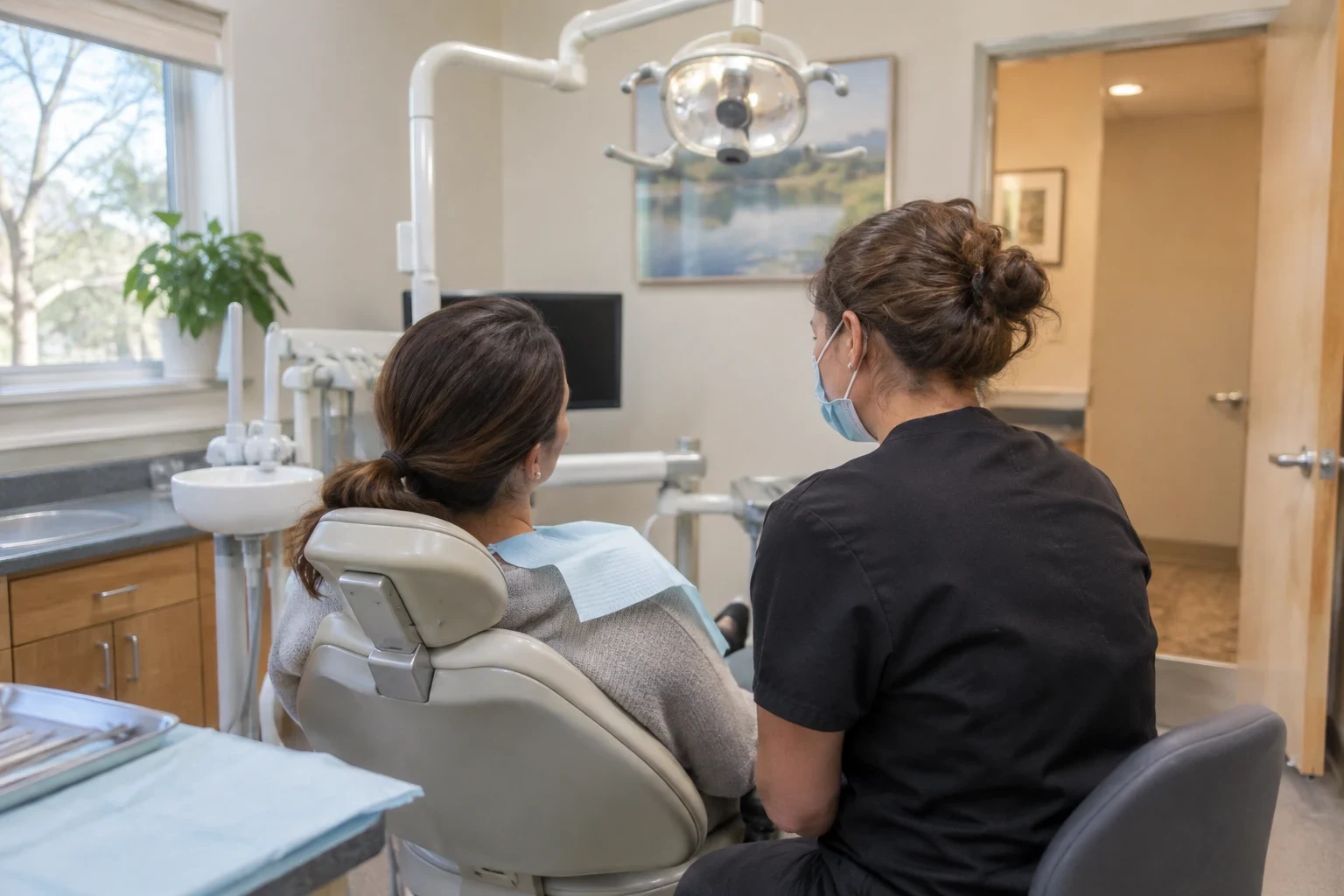
Book your child's next checkup
Tell us your child's age and any concerns when you call, and we will find a time that fits around school and naps. Bring your insurance card and we will go through the paperwork with you.