ServicesExtractions
Tooth Extractions in Oxford, MA
A tooth that is badly broken, infected or crowded is sometimes better removed than rebuilt, and taking it out can stop the ache and spare its neighbors. Before anything starts, we show you the reason, describe the visit and talk about whether the space should be filled later.
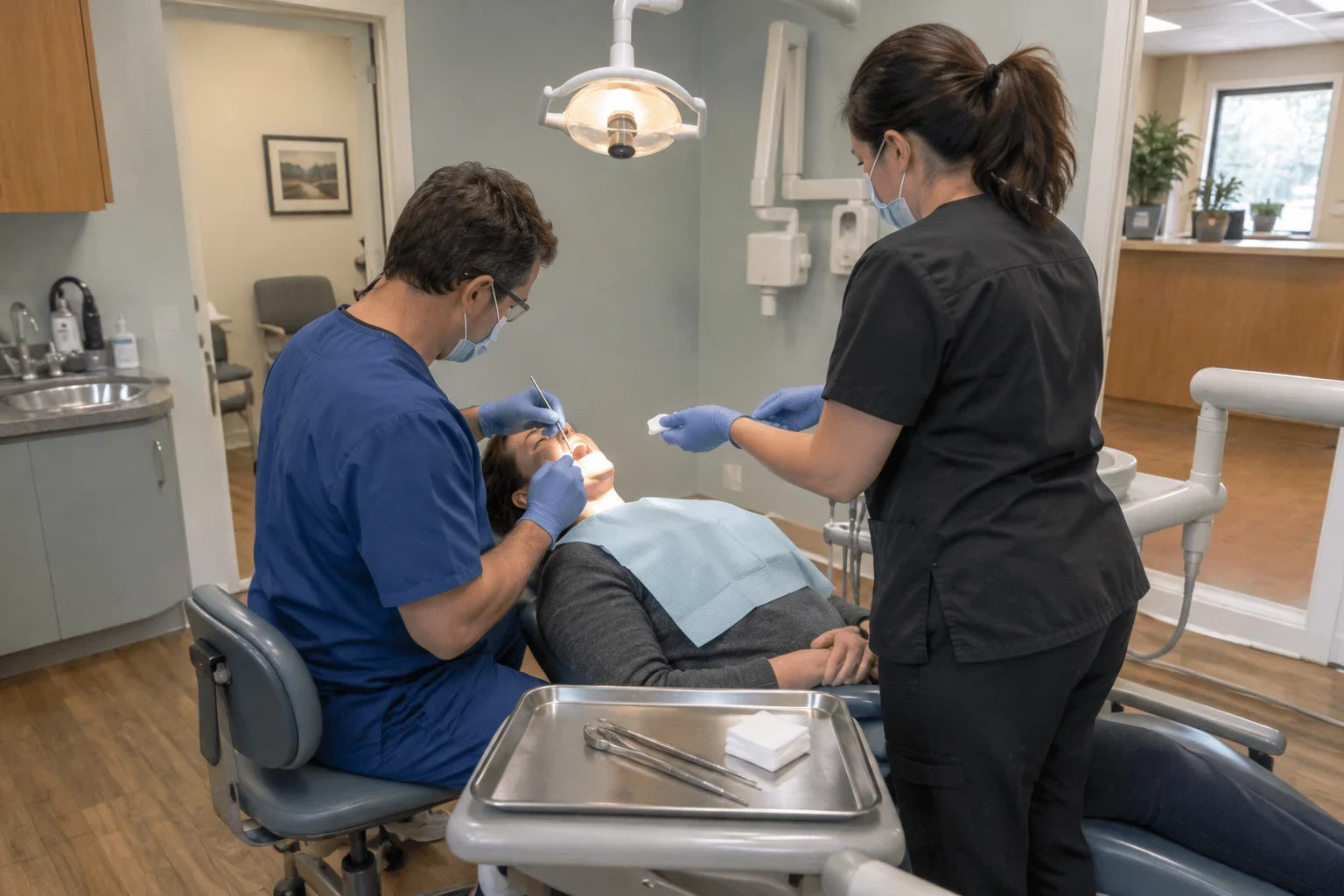
Keeping a tooth where we can, removing it where we should
Our first goal is to keep your natural tooth. A filling or a crown can restore more damage than many people expect, and if that is the better route we will say so. Removal becomes the sensible choice when a root has cracked below the gum, when decay reaches too deep to rebuild, when gum disease has left a tooth too loose to recover, or when the mouth simply has no space for it.
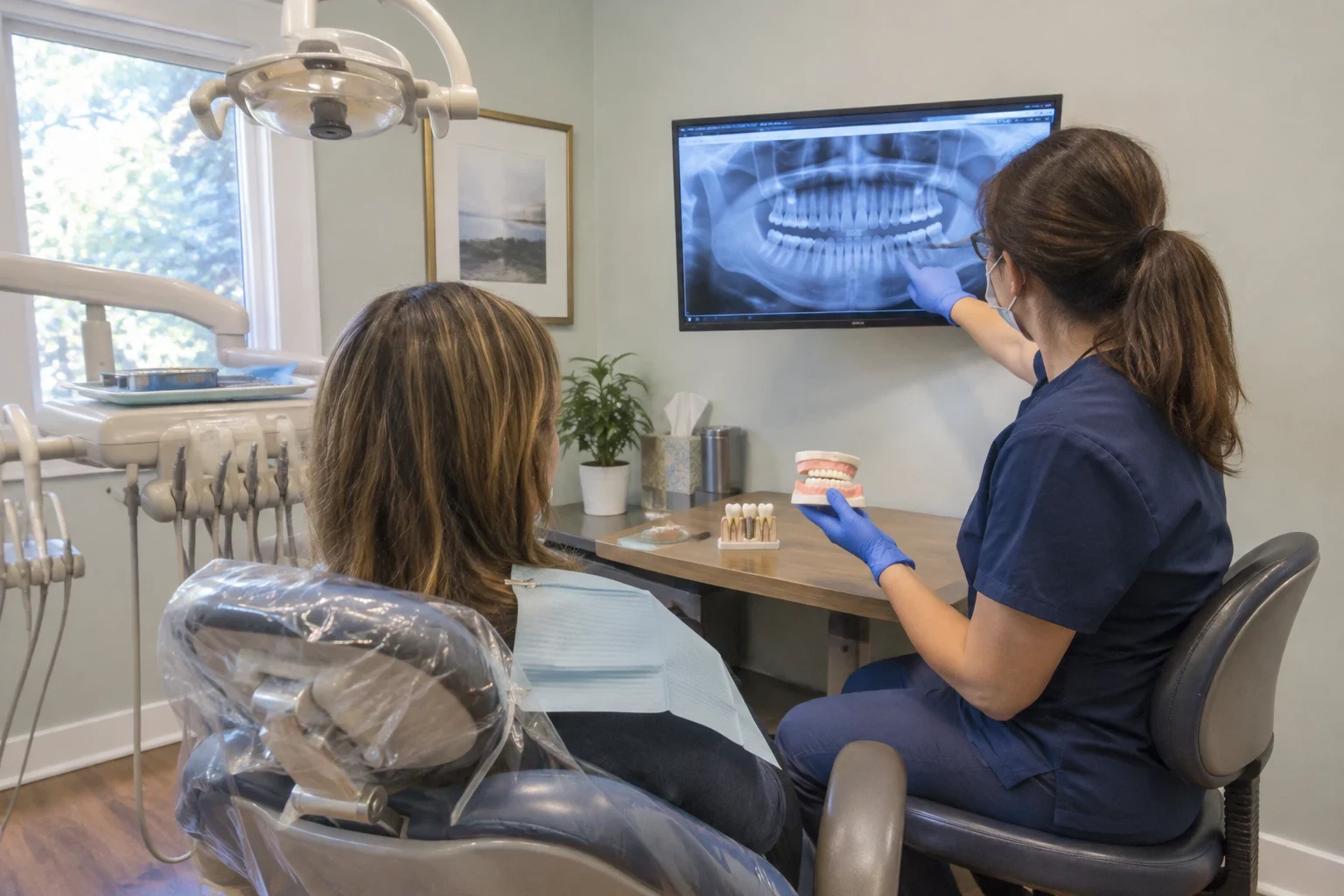
Before you make a decision, we bring your X-ray up on the screen and show you exactly what we are seeing. We explain what to expect if the tooth is removed, what may happen if you hold off, and how an empty space there could affect chewing and the teeth beside it. Clear information makes the decision easier, and it is always yours to make.
What an extraction visit includes
- An exam and X-ray first
- We look at the whole tooth, including the roots you cannot see. Root shape, length and how close the tooth sits to nerves or the sinus all change how we remove it.
- Thorough numbing
- We use a local anesthetic and check that the area is fully numb before we begin. Expect a firm pushing sensation while we work the tooth free, though nothing sharp. Should anything sting, let us know and we pause to give you more.
- Simple or surgical removal
- When the whole crown of the tooth is showing, we can usually loosen it and lift it out with instruments. If it has snapped off at the gumline, we may need to gently open the gum tissue, or divide the tooth and take it out piece by piece. For a deeply impacted wisdom tooth that an oral surgeon is better placed to treat, we will tell you and help arrange the referral.
- Care for the socket
- We clean the site, place gauze so a protective clot can settle in, and add a few stitches when the opening calls for it.
- Written aftercare
- You leave with clear instructions on eating, rinsing and pain control, plus a number to call if anything feels off while you heal.
- A plan for the space
- Not every gap needs a replacement, but some do. We talk through whether a bridge makes sense for you, which our Crowns & Bridges page explains in more detail.
Signs a tooth may need to come out
Pain that keeps coming back
A deep throb that wakes you at night, or sensitivity to heat that lingers, often means the nerve is involved. Sometimes the tooth can be saved, sometimes not, and an exam tells us which.
Swelling or a bump on the gum
A pimple-like spot, a bad taste or a puffy cheek points to infection. It should be seen soon rather than left to settle on its own.
A tooth broken at the gumline
When most of the visible tooth has snapped off, there may be too little left to hold a crown.
An adult tooth that moves
Looseness in a grown tooth usually means bone loss around it. We check how much support remains before recommending anything.
Sore or crowded wisdom teeth
A partly erupted wisdom tooth can trap food under a flap of gum that stays tender and swollen. Others push against the molar in front of them.
Crowding before straightening
Occasionally a tooth needs to come out to make room before treatment with clear aligners. Our Invisalign / Clear Aligners page covers how that planning works.
What affects the cost of an extraction
The fee depends mostly on how the tooth sits and how much work it takes to remove it cleanly. We give you the cost before treatment, along with what your plan is likely to cover. Our office accepts most dental insurance plans, offers an Office Dental Plan for patients without insurance, and accepts the CareCredit Patient Payment Plan.
Simple or surgical
A visible tooth that lifts out whole is the most straightforward. A broken or impacted tooth takes more time and steps, which raises the fee.
Roots and position
Front teeth usually have one root. Molars have two or three, sometimes curved, and back teeth are harder to reach.
Exam and imaging
A new patient visit may include an exam and X-rays that are billed separately from the extraction.
Your coverage
Many PPO plans cover extractions in part, and the share depends on your specific plan. We can check your benefits before the visit.
Replacing the tooth
A bridge or other replacement is its own treatment with its own cost. We outline it separately so you can decide on timing.
How your extraction appointment goes
- 1
Your phone call
Tell us which tooth is bothering you and for how long. Please have a list of your medications ready, especially blood thinners, so we can plan around them.
- 2
Review before we start
We go over the X-ray and your health history, confirm the treatment plan and walk you through the cost. Nothing begins until your questions are answered.
- 3
Numbing and removal
Once the area is fully numb, we gently widen the socket and ease the tooth free. For many simple extractions, the waiting for numbness takes longer than the removal itself.
- 4
The first day at home
Bite on gauze until the bleeding slows. For the first day, skip straws, smoking and hard spitting, since suction can pull the clot loose. Cool, soft foods are easiest.
- 5
A follow-up check
We look at how the site is closing and, if you are ready, talk about what comes next for the space.
Questions about tooth extractions
Will it hurt?
Once the area is properly numb, most patients feel pressure during the removal rather than pain. Some soreness for a few days afterward is normal. Over-the-counter pain relievers usually manage it well, and we will suggest the ones that fit your health history.
How long does healing take?
The sharpest soreness usually settles within a few days. The gum typically closes over the site in about two weeks, while the bone underneath keeps rebuilding for several months. Most people are back to their usual routine the following day.
What is dry socket, and what lowers the risk?
Once the tooth is out, blood gathers in the opening and sets into a soft plug that shields the bone underneath as it mends. When that plug is dislodged early, the bone sits exposed and a deep, throbbing ache can begin a few days later. Avoiding straws, smoking and vigorous rinsing during the first days helps the plug stay put. If the ache starts anyway, call us and we will clean and dress the site so it can settle.
Do I have to replace the tooth?
Not always. A missing wisdom tooth or certain back teeth often cause no trouble at all. Other gaps allow nearby teeth to shift or lean over time, which can change your bite. We will tell you plainly which kind of gap you are left with.
Can I drive myself home?
If you only have local anesthetic, most patients are fine to drive themselves. If you have taken any medication that makes you drowsy, arrange for someone else to drive you.
Is taking out a child's tooth different?
Baby teeth generally have shorter roots and come out with less effort. We also check whether the adult tooth beneath is coming in on schedule. Our Kids' Dentistry page describes how we help younger patients stay comfortable.
Talk through your tooth before you decide
Call and we will set up an appointment to look at the tooth and explain your options in plain language. Patients come to us from Oxford and nearby towns like Charlton, Southbridge and Dudley.