ServicesCrowns & Bridges
Crowns & Bridges in Oxford, MA
A crown covers and strengthens a tooth that is cracked, worn or heavily filled. A bridge replaces a missing tooth by anchoring to the teeth beside it. We show you what we see, explain the options in plain terms and help you choose the one that fits.
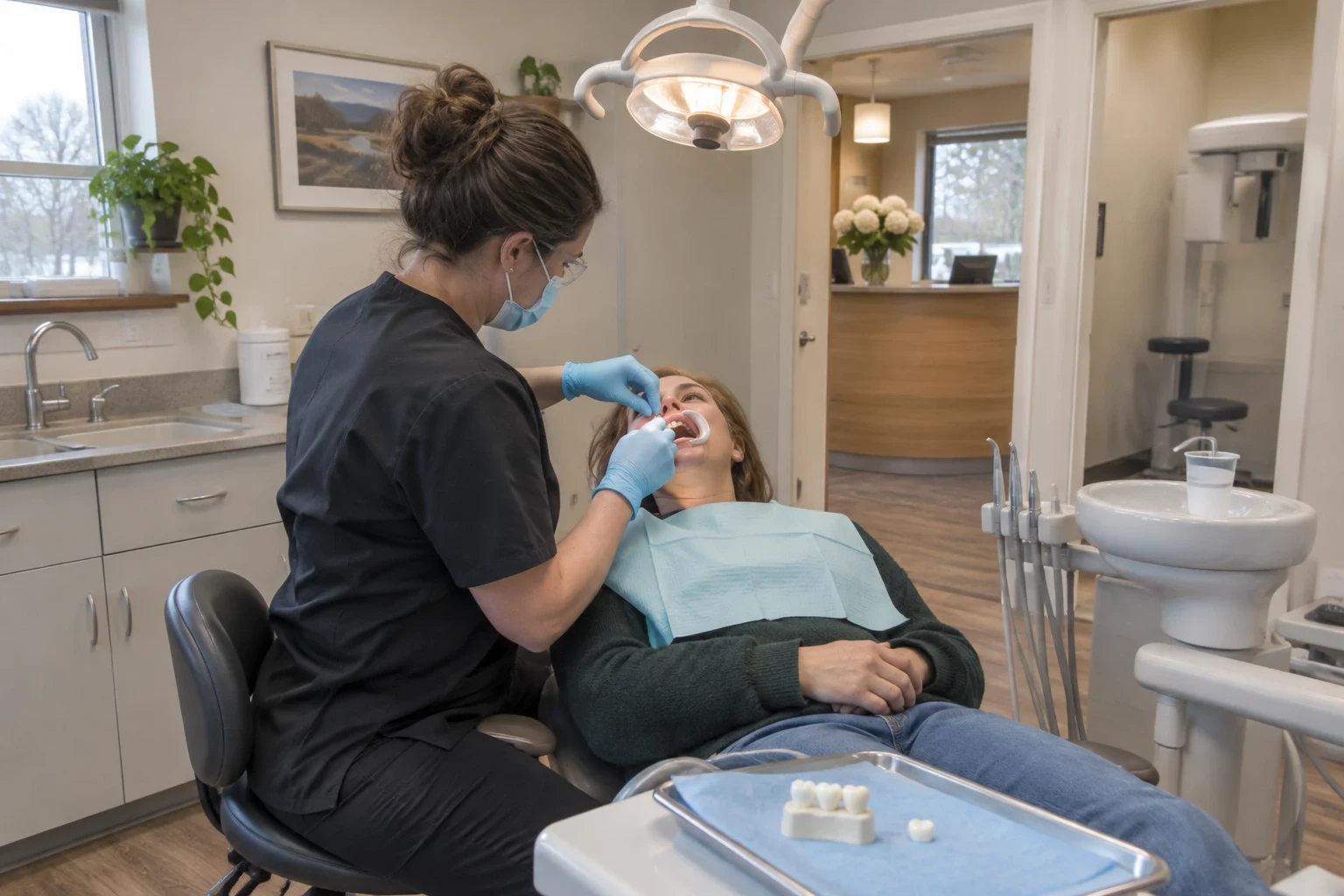
What a crown or bridge actually does
Think of a crown as a fitted cap. When too much of a tooth is lost to decay, a crack or an old filling, what remains can split under normal chewing. A crown wraps the whole visible part of the tooth and spreads that biting force across it, so the tooth can keep working for years.
A bridge solves a different problem: a gap. A false tooth, called a pontic, is joined to crowns on the teeth on either side. Left open, a gap lets neighboring teeth tip and the opposite tooth drift, which changes your bite over time.
Not every damaged tooth needs a crown. If a filling will do the job, we will tell you so, and our Fillings page explains that option. Patients from Oxford and nearby towns like Webster and Charlton often come in simply wanting a clear answer, and that is where we start.
What your crown or bridge treatment includes
Exam and X-rays first
We check the tooth, the root and the bone around it. A crown only lasts if what sits underneath is healthy.
A plain choice of materials
Zirconia is very strong and suits back teeth. Lithium disilicate porcelain lets light through like natural enamel, so it looks right on front teeth. Porcelain fused to metal and gold are still good choices in some mouths, and we explain the tradeoffs of each.
Shade matching
We match the color and translucency of the teeth around it in natural light, so the new tooth does not stand out when you smile.
A temporary while you wait
You leave the first visit with a temporary crown or bridge that protects the prepared teeth while the final one is made.
Fit and bite check
Before anything is cemented, we check the edges at the gumline and adjust the bite until it feels even. A high spot is easy to fix now and sore to live with later.
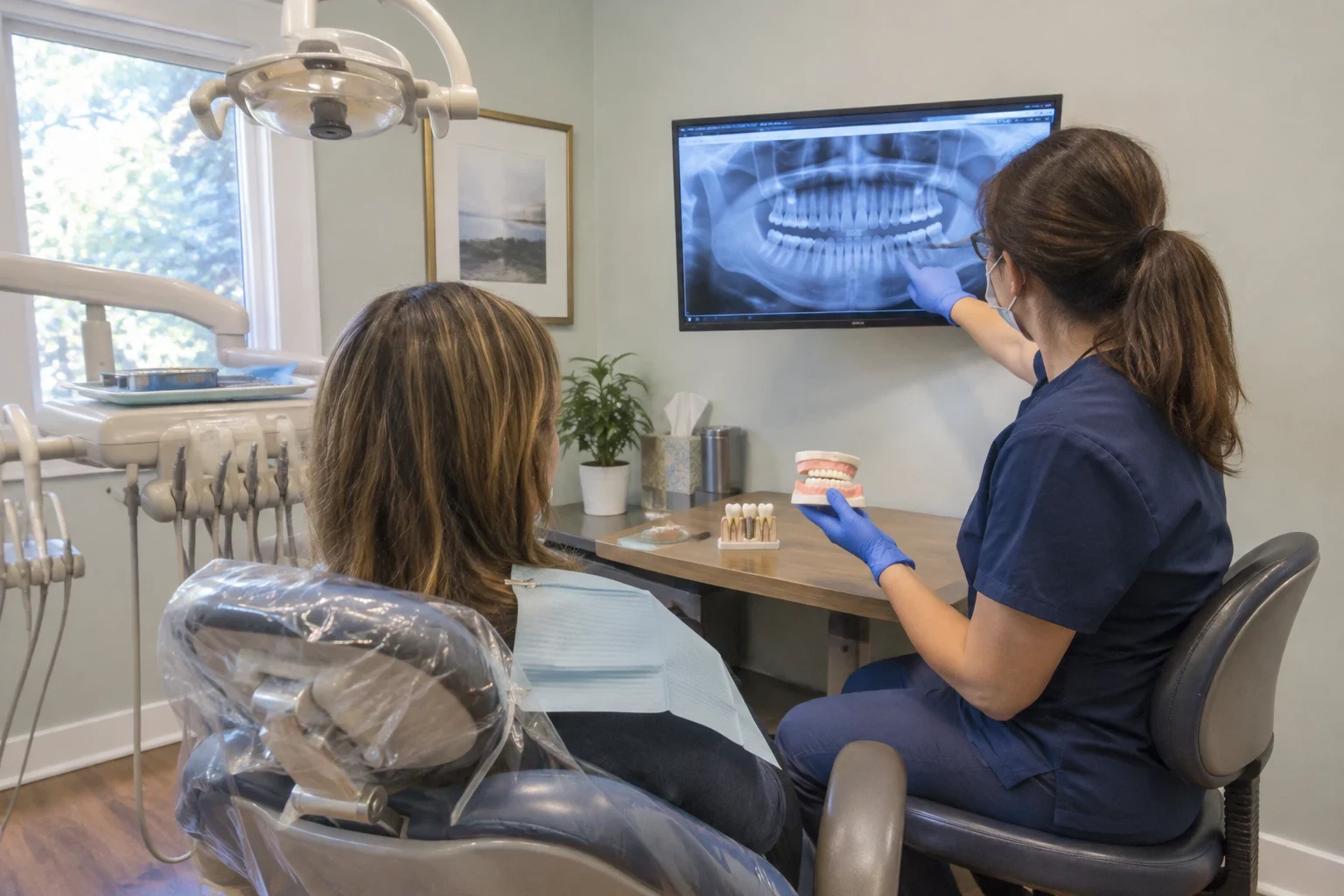
Signs a crown or bridge may be the right call
- Sharp pain when you bite down
- A quick jolt on chewing, especially when you release, often points to a crack. A crown can hold the tooth together before the crack spreads toward the root.
- A large filling that keeps breaking
- When a filling covers more than about half the tooth, the walls around it get thin. Replacing it again may not be enough.
- A tooth that had a root canal
- Back teeth treated with a root canal become more brittle. Most need a crown to avoid fracturing.
- A gap from a missing tooth
- If a tooth was removed and the space was never filled, a bridge can restore chewing and keep the teeth beside it from drifting.
- An old crown that looks or feels wrong
- A dark line at the gumline, a rough edge, looseness or a bad taste around an older crown are worth checking. Decay can start under the margin without hurting.
- Teeth worn flat
- Grinding can wear teeth down until they chip. Crowns can rebuild their height and shape.
How the visits go
- 1
Consultation and plan
We look at the tooth, take X-rays and talk through a crown, a bridge or any other reasonable option. Before anything starts, you have a written treatment plan showing the costs and the part your insurance is expected to pay.
- 2
Preparing the tooth
Once the area is numb, we gently reshape the tooth so the crown can sit flush with its neighbors. Where decay or missing structure leaves a hollow, we first rebuild a solid core.
- 3
Impressions and temporary
We capture the shape of your teeth and the way they meet, pick the shade and fit a temporary. The dental lab then makes your crown or bridge, which usually takes a couple of weeks.
- 4
Fitting and cementing
When the finished piece is back from the lab, the temporary comes off and we seat the new crown or bridge to test it. We check the edges and your bite, make small adjustments, then bond it permanently. Most patients are eating normally by that evening.
What affects the cost of a crown or bridge
Three things set most of the price: the material, how many teeth are involved and any work the tooth needs before the crown can go on. You see each of those as its own line before treatment starts. Most dental insurance plans are accepted here. If you have no coverage, our Office Dental Plan for patients without insurance is an option, and the CareCredit Patient Payment Plan can spread your share over time.
- Material
- Zirconia, porcelain, porcelain fused to metal and gold each come with a different lab fee. Our recommendation follows what the tooth needs, not the priciest choice on the list.
- Number of units
- Each crown counts as one unit. A typical three-unit bridge is two crowns holding one false tooth, and every added unit raises the total.
- Work under the crown
- Deep decay can call for a core buildup, and some teeth need a root canal before a crown makes sense. These are separate steps, so they appear as separate lines on your plan.
- Your insurance plan
- Many PPO plans class crowns and bridges as major work, covered at a lower percentage and capped by an annual maximum. We look up your benefits and tell you what your portion is likely to be.
Crown and bridge questions
- Does getting a crown hurt?
- The area is numbed before we prepare the tooth, so most patients feel pressure rather than pain. The gum may be a little tender for a day or two afterward. Over-the-counter pain relief is usually enough.
- How long does a crown last?
- A well-fitted crown can last many years, often well over a decade. How long yours lasts depends on the material, your bite, whether you grind and how well you keep the edges clean. Regular visits on our Exams & Cleanings schedule let us catch problems at the margin early.
- Can I eat normally with a temporary crown?
- Mostly, yes. Avoid sticky foods like caramel and very hard foods on that side, and slide floss out sideways rather than pulling it up. If the temporary comes loose, give us a ring and we will set a time to recement it.
- Should I get a crown or just a bigger filling?
- It depends on how much healthy tooth is left. If the walls are thick enough, a filling is simpler and costs less. If they are thin or cracked, a crown protects the tooth from splitting, which can sometimes lead to an extraction.
- Will a bridge look like my own teeth?
- Yes, when the shade and shape are matched carefully. The false tooth is shaped to sit against the gum so it looks like it grows from there. Cleaning under it takes a floss threader or water flosser, and we show you how.
Find out what your tooth needs
Come in for an exam and we will explain what we find, the options that make sense and what each one costs. No pressure to decide in the chair.