ServicesFillings
Dental Fillings in Oxford, MA
A small cavity is the easiest problem in dentistry to fix, and the cheapest to fix early. We remove the decay, seal the tooth with a tooth-colored filling and show you what we found, so you understand the work before it starts.
What a Filling Does and When It Is the Right Choice
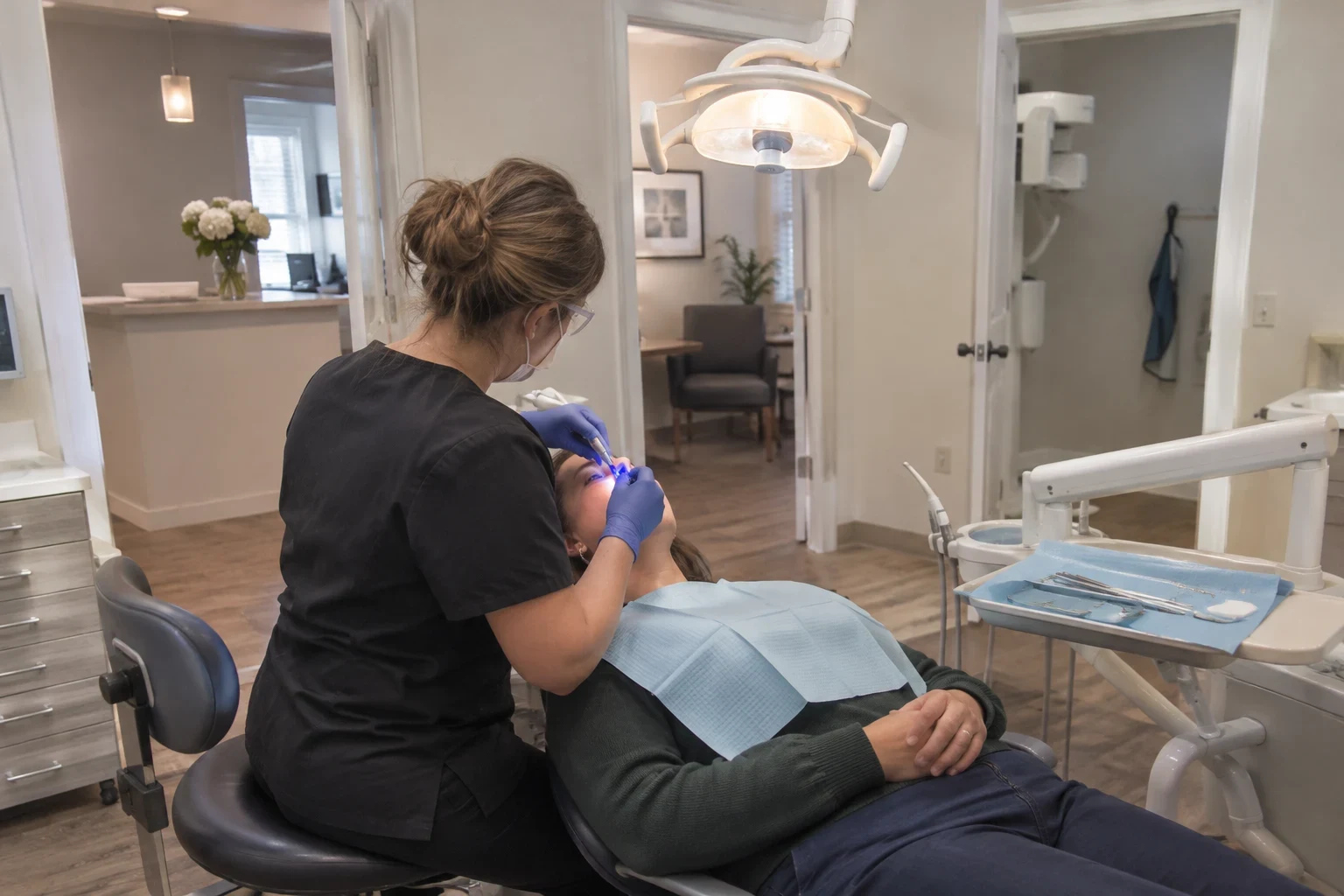
A filling replaces the part of a tooth that decay has damaged. We clean out the soft, broken-down enamel and dentin, then rebuild the space with a composite resin shaded to match the tooth around it. Once it hardens, the tooth is sealed again and you can chew on it normally.
Fillings make sense when most of the tooth is still healthy. If decay or a crack has taken a large share of the tooth, a filling may not hold up under biting pressure, and we will tell you plainly when a crown is the sturdier option. Our Crowns & Bridges page explains that step.
The goal is to keep as much natural tooth as possible. A cavity caught at a routine visit usually needs a small, simple filling, while one left for a year or two can reach the nerve.
What Comes With Every Filling
We show you the cavity
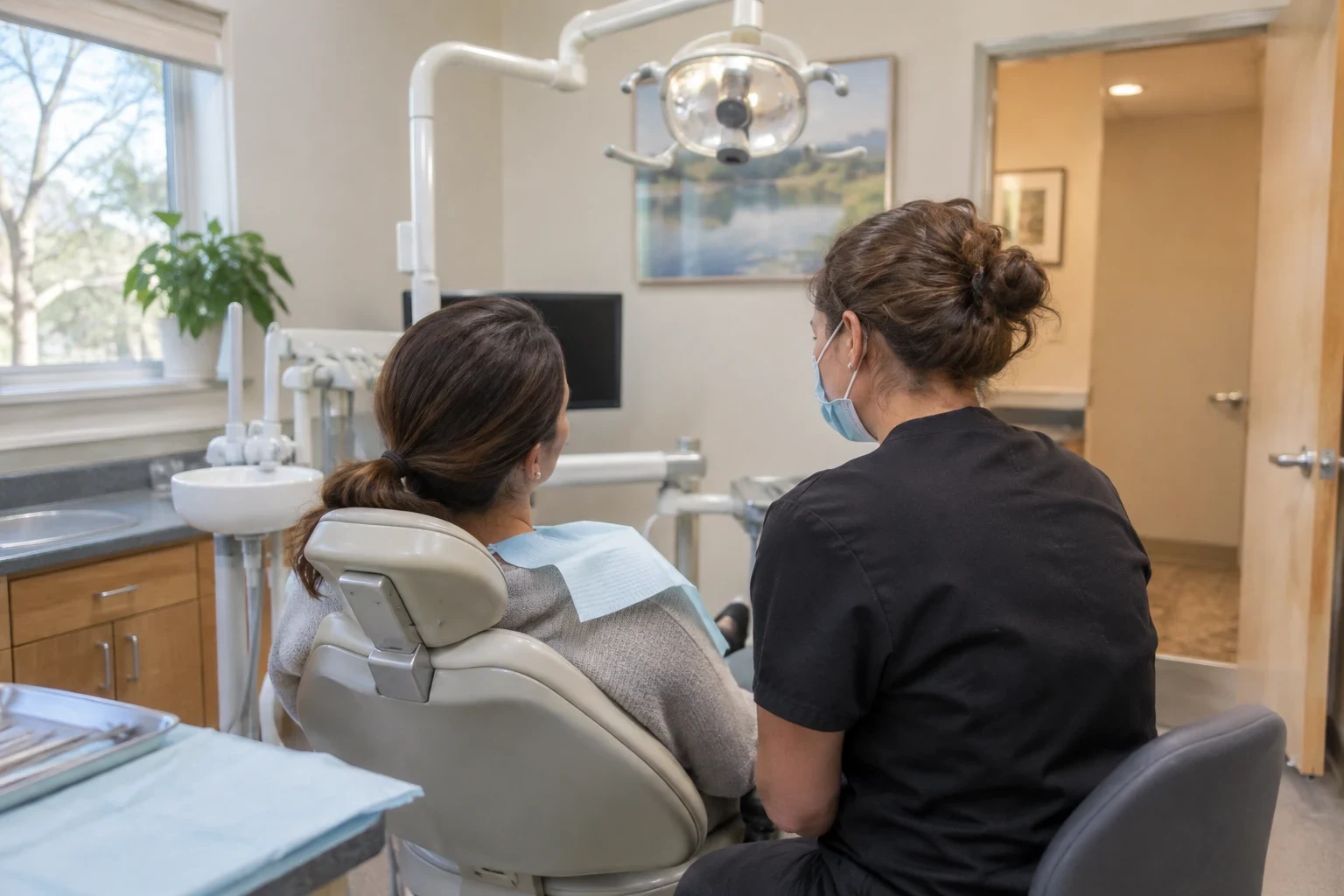
Before any treatment, we examine the tooth and take an x-ray if one is needed. We put the image in front of you and point to the shadow of decay, so the reason for the filling is clear.
Comfortable numbing
The area is fully numbed before we start working. Patients typically describe vibration and pressure rather than pain.
Composite matched to your enamel
We build the filling from tooth-colored composite resin, set down in thin layers and hardened one at a time with a curing light. Working in layers lets each part cure completely and helps the shade blend with the tooth.
An even bite and a smooth finish
We adjust the surface until your upper and lower teeth close together evenly, then polish it. A filling that sits even slightly high can leave the tooth aching, so this step is never rushed.
Help with failing older fillings
Worn or older silver fillings can open up at the margins, which lets fresh decay begin beneath them. If one is no longer doing its job, we can replace it with composite.
When a Tooth Is Asking for Attention
Sharp sensitivity to cold or sugar
A brief zing from iced drinks or sweets often means the outer enamel has worn through and the softer layer underneath is exposed.
Floss shredding in the same gap
When floss frays or food wedges between the same two teeth again and again, a cavity or rough edge may be hiding there.
Visible spots or pits
A brown or gray mark you can see, or a small hollow your tongue keeps returning to, is easier to treat while it is still small.
Pain when you chew
Biting pain in one tooth may come from decay, a broken filling or a crack in the tooth. The fix differs for each, so we examine it before recommending anything.
An older filling that has changed
A chipped margin, a ledge you can catch with your tongue, or a dark line forming around an old filling can be signs it has stopped sealing.
How the Appointment Goes
- 1
Look, explain, then decide
We confirm the cavity and walk you through the x-ray or photo. You hear how large the filling will be and what the work involves, and nothing begins until you agree.
- 2
Getting the tooth numb
A topical gel goes on first, then we give the local anesthetic gradually. We check that the tooth is completely numb before moving on.
- 3
Clearing the decay
Only the softened, damaged structure comes out, and healthy tooth is left in place. We then clean and prepare the surface so the composite bonds firmly.
- 4
Layering and shaping
Composite is added in layers, each set with the curing light. We sculpt it to match the tooth's natural grooves, test your bite and polish it smooth.
- 5
Going home
Numbness in the lip and cheek usually lingers for a couple of hours, so hold off on meals until it fades. Some mild sensitivity over the next few days is normal and tends to settle by itself.
What Affects the Cost of a Filling
Fillings are priced by the tooth and by how much of it needs rebuilding, so two fillings on the same day can cost different amounts. We explain the expected cost before starting. Our office accepts most dental insurance plans, offers an Office Dental Plan for patients without insurance, and accepts the CareCredit Patient Payment Plan for financing.
- Size and number of surfaces
- A filling on one surface of a tooth takes less time and material than one wrapping around two or three sides.
- Which tooth it is
- Back molars are harder to reach and take more chewing force, which can add time to the work.
- How deep the decay goes
- Deep decay close to the nerve may need a protective liner, and very large cavities may call for a crown instead.
- Your insurance coverage
- Many plans cover fillings at a set percentage after any deductible. We can help you read what your plan pays when you schedule.
Questions Patients Ask About Fillings
Something not covered here? (508) 893-4948
Will getting a filling hurt?
Most people notice the numbing more than the filling itself, so we give the anesthetic slowly to keep it comfortable. After the tooth is numb, expect pressure and some vibration, not pain. If anything feels sharp, lift your hand and we pause and add more anesthetic.
How long does a filling take?
One small filling usually fits in a single short appointment. A larger filling, or work on several teeth in one visit, needs more chair time. When you phone to schedule, we give you an estimate of how long to plan for.
When can I eat after a filling?
The curing light sets composite hard before you leave the chair, so the filling is ready to use. What you are waiting for is feeling to return, since a numb lip or tongue is easy to bite by accident. If the tooth is tender, favor soft food on that side for a day.
How many years will a filling hold up?
There is no single number. A large filling on a back molar works harder than a small one near the front, and habits matter too. Clenching or grinding, crunching ice and skipping cleanings all wear fillings down faster, and routine visits on our Exams & Cleanings schedule let us catch a worn edge before it starts to leak.
Should I replace my old silver fillings?
Only if there is a reason. An intact silver filling that still seals the tooth can stay where it is. When one is cracked, leaking or has new decay around it, we can swap it for tooth-colored composite and show you what we saw.
Do you fill children's teeth too?
We do. Baby teeth save room for the adult teeth coming in behind them, so a cavity in one is still worth treating. Our Kids' Dentistry page explains how we help young patients stay relaxed in the chair.
Have a Tooth That Feels Different?
A sensitive or rough tooth is easier to treat now than later. Phone our Oxford office and we will find a time to look at it and explain your options.