ServicesInvisalign / Clear Aligners
Invisalign and Clear Aligners in Oxford
Aligners move teeth gradually using a sequence of clear, removable plastic trays, with no brackets or wires. We study your bite, tell you plainly what aligners can and cannot change for it, and walk you through the whole plan before treatment starts.
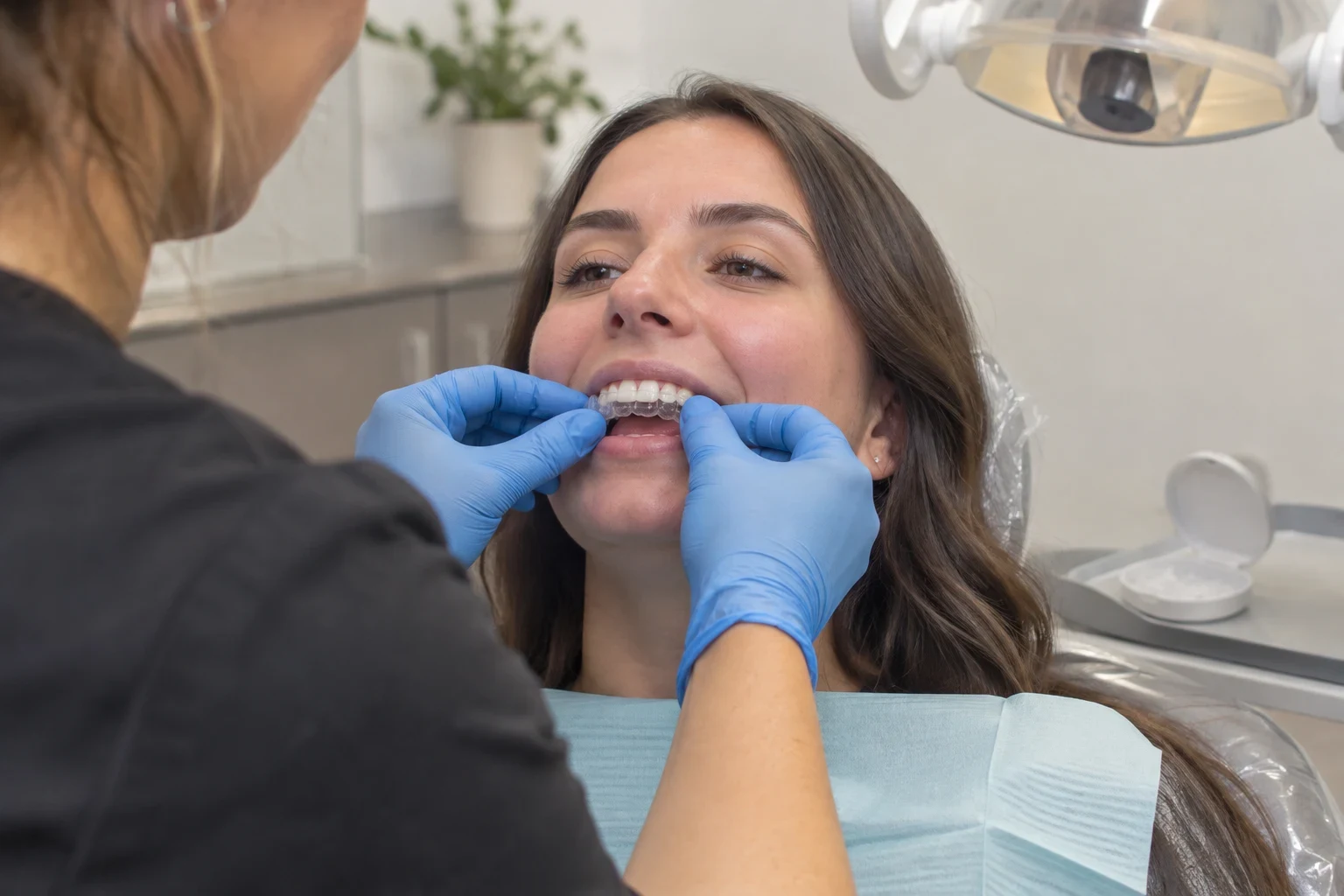
What clear aligners are, and when they make sense
Each aligner is a custom tray made from smooth, clear medical-grade plastic. It fits snugly over your teeth and presses them a fraction of a millimeter toward a planned position. Every week or two you switch to the next tray in the series, and the teeth follow along.
Aligners work well for mild to moderate crowding, spacing, teeth that have drifted after braces years ago, and many bite problems. They are not the right tool for every case. Severe rotations, large jaw discrepancies or teeth with active decay or gum disease may need a different approach first, and we will tell you that directly rather than sell you trays that cannot finish the job.
Most of our aligner patients are adults and older teens from Oxford and nearby towns like Auburn, Webster and Charlton who want straighter teeth without metal on show.
What your aligner treatment includes
A full exam first
Before any planning, we check for cavities, gum health and old fillings or crowns that could affect how trays fit. Moving teeth that are not healthy causes problems, so that comes first.
Digital impressions and a preview
We take a detailed scan of your teeth and bite. From it, you can see a step-by-step preview of how your teeth are planned to move, and where they should end up.
Attachments and small adjustments
Many plans use tiny tooth-colored bumps, fixed to a few teeth with dental resin, so the trays have something to grip and turn. Some cases also need a light polish between teeth to make room. We explain both before we start.
Check-in visits
Every several weeks we look at how the teeth are tracking against the plan. If a tooth lags behind, we catch it early.
Refinements when needed
It is common to need a short extra set of trays near the end to fine-tune a few teeth. We raise that possibility at the start so it is not a surprise.
Retainers at the finish
Teeth want to drift back. A retainer, worn as directed, is what keeps the result you worked for.
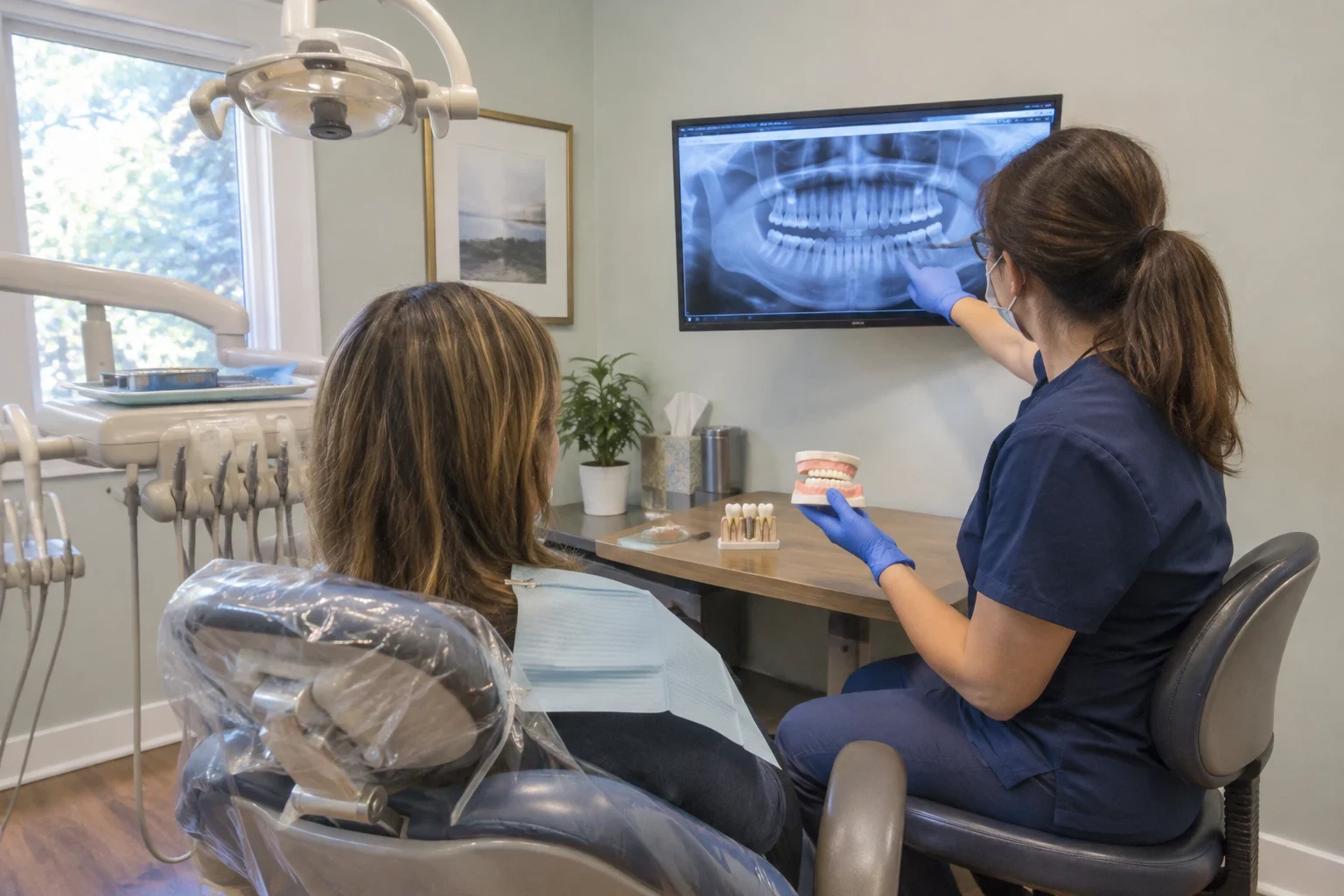
Signs clear aligners may be worth asking about
- Crowding that traps food
- Overlapping teeth are harder to floss and clean. Plaque collects in the tight spots, which raises the risk of cavities and gum irritation.
- Gaps that have opened up
- Spaces between front teeth can widen over time. Aligners can close many of them gently.
- Teeth shifting after old braces
- If you had braces as a teen and stopped wearing your retainer, some movement back is very common. This is one of the cases aligners handle best.
- Uneven wear or a bite that feels off
- Teeth that meet unevenly can chip or wear down in odd places. Straightening them spreads the load more evenly.
- You avoid smiling in photos
- That is a fair reason too. Straighter teeth are also easier to keep clean, so the benefit goes past looks.
How treatment runs, start to finish
- 1
Consultation and exam
We look at your teeth, gums and bite, answer your questions and tell you honestly whether aligners suit your case. If something needs treating first, like a cavity, we cover that.
- 2
Scan and treatment plan
We take the digital scan and build your plan. You see the projected movement, the estimated number of trays and a written breakdown of the cost before you commit.
- 3
Fitting day
We place any attachments and fit your first set of trays. Before you leave, you practice seating and removing them yourself, and we go over how to keep them clean. Expect some pressure for the first day or two of each new set, which is a sign the teeth are moving.
- 4
Wearing and switching trays
Trays need to be worn most of the day and night, usually around 20 to 22 hours, and taken out only to eat, drink anything other than water, and brush. Skipped hours are the most common reason treatment runs long.
- 5
Finishing and retention
Once the teeth reach their planned position, we remove attachments, polish the teeth and fit your retainers.
What moves the cost of clear aligners
The fee depends on how much your teeth need to move and how many months that takes. After the scan we give you a written estimate, so you see the full figure before the first tray is made. We accept most dental insurance plans, and patients who would rather pay in monthly amounts can apply for the CareCredit Patient Payment Plan.
- How complex the movement is
- A few crowded front teeth need far fewer trays than a full bite correction. More trays and more months mean a higher fee.
- Work needed beforehand
- Cavities, gum treatment or a worn crown should be addressed before aligners. Those are separate costs, and we list them on their own lines.
- Refinements and retainers
- Ask whether extra trays and your retainers are part of the estimate. We spell out what is and is not covered so nothing turns up later.
- Your insurance benefits
- Some PPO plans include an orthodontic benefit, often with its own lifetime maximum and age limits. Bring your plan details and we will help you read what applies.
- No insurance
- Our Office Dental Plan for patients without insurance can lower the cost of the exams, cleanings and other care that come before and during treatment.
Clear aligner questions we hear most
- Do aligners hurt?
- Most people feel pressure or mild soreness for a day or two after switching to a new set of trays. It usually fades quickly. Over-the-counter pain relief and soft foods help on those days.
- How long does treatment take?
- Simple cases can finish in several months, while fuller bite corrections can take a year or longer. Your scan and plan give a closer estimate. How consistently you wear the trays matters as much as the plan itself.
- Can I eat and drink with the trays in?
- Plain water is fine. For everything else, take the trays out, then brush or at least rinse before putting them back. Food or sugary drinks trapped under the plastic sit against your teeth and can cause decay.
- Will people notice I am wearing them?
- The trays are clear and thin, so most people will not notice in normal conversation. Attachments are tooth-colored. You may have a slight lisp for the first few days while your tongue gets used to them.
- Is my teenager a good fit for aligners?
- Many teens do well with aligners once their adult teeth are in, as long as they will wear the trays consistently. We can look at your child's bite during a visit, and our Kids' Dentistry page covers care for younger children.
- Do I really need a retainer afterward?
- Yes. Teeth tend to shift back after they have been moved, especially in the first months. Wearing your retainer as directed is what protects the result.
See whether aligners fit your smile
An appointment gives you an exam, a clear answer on whether aligners suit your teeth, and a written plan to think over at your own pace.